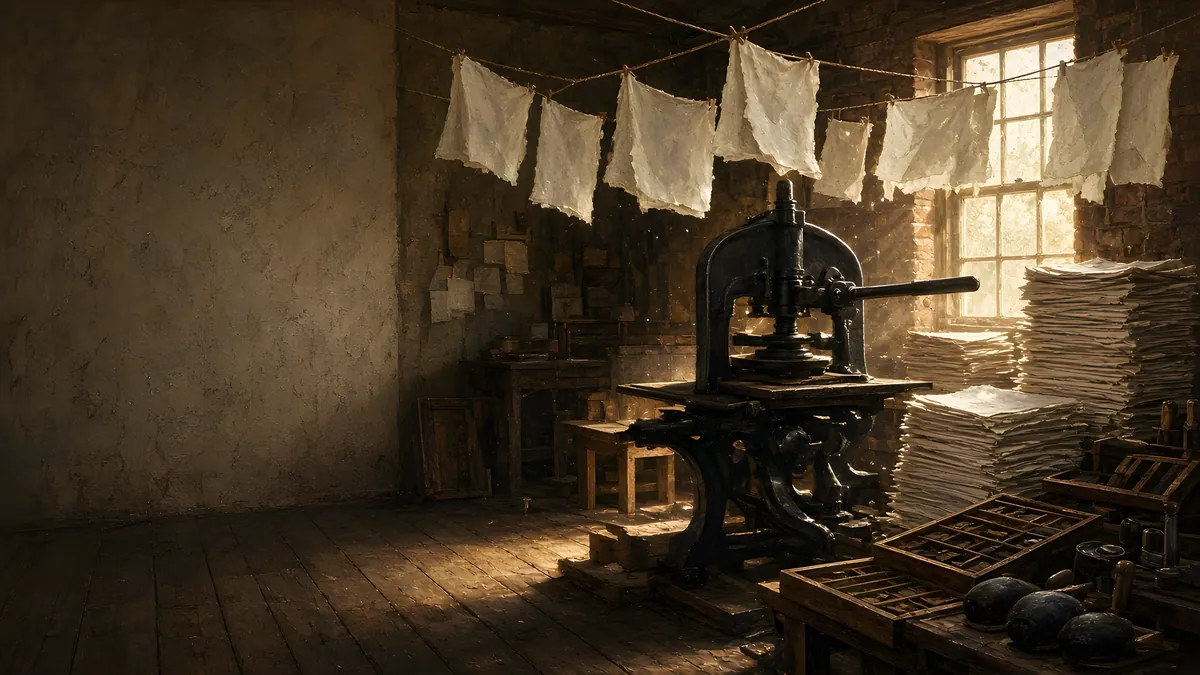
Illustration, not a photograph · an 1830s village print shop, imagined
From one press in Palmyra

The Book of Mormon
around the world

5,000copies · first printing, Palmyra, 1830

In 1830 E. B. Grandin printed 5,000 copies. By summer 2023 more than 200 million had been published. Every figure on this page comes from a Church source and is dated.

1830 → today

Languages and copies over time

Languages with a published edition (full or selections)

Line: each language's first-published year from the Church's Book of Mormon translations list (accessed 10 Nov 2026). Dots: official dated milestones.

Copies published (cumulative)

Dots are the only official data points we found; the line between them is drawn straight and is not measured. Sources are in the timeline below.

Every inhabited continent

Reaching the world, region by region

The first edition in a language of each region, from the Church History Library's “Translations of the Book of Mormon” exhibit and the Church's translations list.

2026

We found no Church source about a Book of Mormon edition or translation tied to Antarctica, so we say all inhabited continents. Map: Natural Earth (public domain). Markers show regions, not exact print locations, except where the source names one.

Two witnesses of Christ

The Bible and the Book of Mormon

Members of the Church “value the Bible and the Book of Mormon as witnesses of Jesus Christ.”

“The Book of Mormon and the Bible Are God's Word”

The introduction to the Book of Mormon calls it “a volume of holy scripture comparable to the Bible” and “a new and additional witness that Jesus Christ is the Son of the living God.” Its title page gives its purpose: “to the convincing of the Jew and Gentile that Jesus is the Christ, the Eternal God, manifesting himself unto all nations.”

Introduction · Title Page

See the two sticks join, doctrine by doctrine → How the Bible came to us →

Ezekiel 37:16–17

churchofjesuschrist.org

Side by side

How they work together

Read passages next to each other. Turn on “Show differences” to see where the wording changes. Nephi was told the later records “shall establish the truth of the first” and “make known the plain and precious things which have been taken away” (1 Nephi 13:40). They complement and clarify each other. They are not word-for-word copies.