A hill in the woods south of Palmyra. A stone box. A record "engraven on plates which had the appearance of gold." Scroll to walk to the hill.
“Convenient to the village of Manchester, Ontario county, New York, stands a hill of considerable size, and the most elevated of any in the neighborhood.”
Shortly after midnight on 22 September 1827, Joseph and Emma rode to the hill in a borrowed carriage. Emma waited below while Joseph climbed the slope to the place where the plates were hidden.
On the way down he “secured them in a hollow log where they would be safe until he obtained a lockbox. He then found Emma, and they returned home as the sun began to rise.”
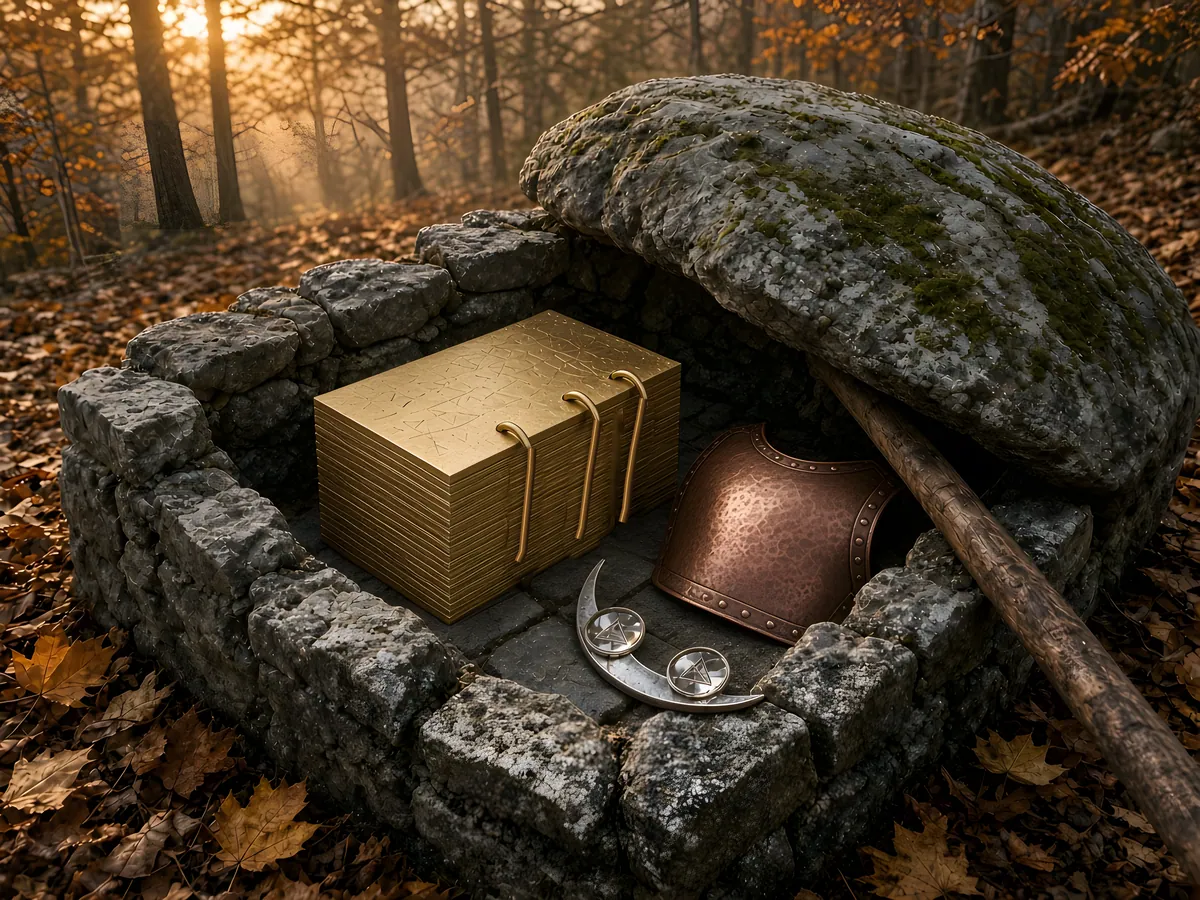
On the west side of this hill, not far from the top, under a stone of considerable size, lay the plates, deposited in a stone box. This stone was thick and rounding in the middle on the upper side, and thinner towards the edges, so that the middle part of it was visible above the ground, but the edge all around was covered with earth. Joseph Smith—History 1:51
Having removed the earth, I obtained a lever, which I got fixed under the edge of the stone, and with a little exertion raised it up. I looked in, and there indeed did I behold the plates, the Urim and Thummim, and the breastplate, as stated by the messenger. The box in which they lay was formed by laying stones together in some kind of cement. In the bottom of the box were laid two stones crossways of the box, and on these stones lay the plates and the other things with them. Joseph Smith—History 1:52 · read the chapter
Joseph first saw the plates in 1823 but was told to wait. He received them on 22 September 1827 (JS—H 1:53, 59). The illustration is ours, drawn from the verses above. It is not a photograph and not a reconstruction of the actual site.

In 1877 Brigham Young recounted Oliver Cowdery’s description of a large cave room in the Hill Cumorah, with many plates and the sword of Laban unsheathed on a table. The account is secondhand.
The cave in the Hill Cumorah →each plate was six inches wide and eight inches long and not quite so thick as common tin … bound together in a volume, as the leaves of a book with three rings running through the whole. The volume was something near six inches in thickness, a part of which was sealed. Joseph Smith, “Church History” (the Wentworth letter), Times and Seasons, 1 March 1842, p. 707 · josephsmithpapers.org
3D model by us, built to the Wentworth-letter proportions in the blueprint. The engravings are vector traces of a surviving 1829–31 copy of the characters, set out in an artistic layout. Ring size, hole placement, leaf count and which half is sealed are artistic estimates; no source records them. The gold surface (hammer marks, wear, patina in the grooves, uneven edges) is an artistic rendering, and the leaves are drawn a little thicker than the 0.02″ estimate so 60 leaves fill the unsealed half. Lighting: “Studio Small 09” HDRI by Sergej Majboroda; stone: “Dark Rock” by Amal Kumar, both CC0 from Poly Haven.
Later witness statements vary a little. That is normal for people describing something from memory. Here they are as the Church's history topic gives them, with who said each one:
| Feature | Range | Who |
|---|---|---|
| Width × length | “six” or “seven inches wide by eight inches in length” | Joseph Smith (6″); Martin Harris, 1859, and David Whitmer, 1888 (7″) |
| Thickness of the whole | “between four and six inches” | Martin Harris, 1859 (4″); Joseph Smith, 1842 (about 6″) |
| Each leaf | “the thickness ‘of plates of tin’” | Martin Harris, 1859 |
| Weight | “about ‘forty to sixty’ pounds” | Martin Harris interview, 1870 |
| Rings | “Three D-shaped rings bound the leaves ‘through the back edges’” | David Whitmer, 1877 |
| Sealed | “about the half of the book”; it “appeared as solid as wood” | David Whitmer, 1878 (Joseph Smith: “a part”) |
| Sound | leaves would “rustle with a metallic sound when the edges were moved by the thumb” | Emma Smith, 1879 |
Church History Topics, “Gold Plates” · churchofjesuschrist.org. The topic adds that plates of pure gold this size have been estimated at “at least 45 kilograms (100 pounds).” It also notes that William Smith believed the plates were “a mixture of gold and copper.”
The Eight Witnesses wrote that the plates “have the appearance of gold,” that they “did handle with our hands” the translated leaves, and that the engravings had “the appearance of ancient work, and of curious workmanship.” They added: “we have seen and hefted.”
The Testimony of Eight Witnesses · churchofjesuschrist.org
Joseph wrote that with the record was found “a curious instrument which the ancients called ‘Urim and Thummim,’ which consisted of two transparent stones set in the rim of a bow fastened to a breast plate.”
Wentworth letter, 1842 · josephsmithpapers.org
Every 3D proportion on this page comes from one parameter file. Sourced values are 6″ × 8″ plates, a volume about 6″ thick, three rings, and part of it sealed. Everything marked * is an artistic estimate needed to draw or build it.
Drawn as vector sheets (SVG) and exported at 4K (PNG, 4608 px). Amber values marked * are artistic estimates. Sources are printed on each sheet.
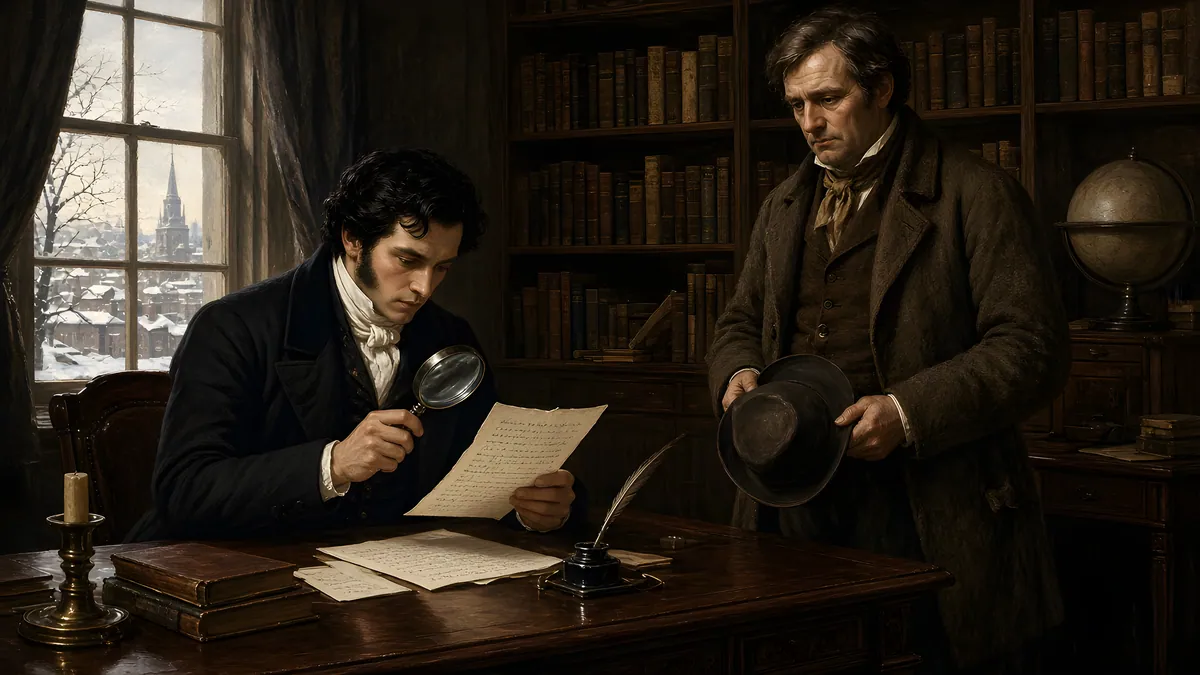
Martin Harris, a Palmyra farmer who helped Joseph, carried a transcription of characters to scholars. He wanted to learn what they were, and whether the work was worth backing.

He then said to me, ‘Let me see that certificate.’ I accordingly took it out of my pocket and gave it to him, when he took it and tore it to pieces, saying that there was no such thing now as ministering of angels, and that if I would bring the plates to him he would translate them. I informed him that part of the plates were sealed, and that I was forbidden to bring them. He replied, ‘I cannot read a sealed book.’ Martin Harris's account, Joseph Smith—History 1:65 · read 1:63–65
The Church's history topic notes: “In later statements, Anthon denied having authenticated the characters,” and that “disagreements between these historical accounts leave some questions about the trip unanswered.” Either way, “Harris came away more convinced than before.” · Martin Harris's Consultations with Scholars · Saints ch. 5
Harris and Joseph later spoke of the visit as fulfilling Isaiah. The Book of Mormon tells the same prophecy at more length.
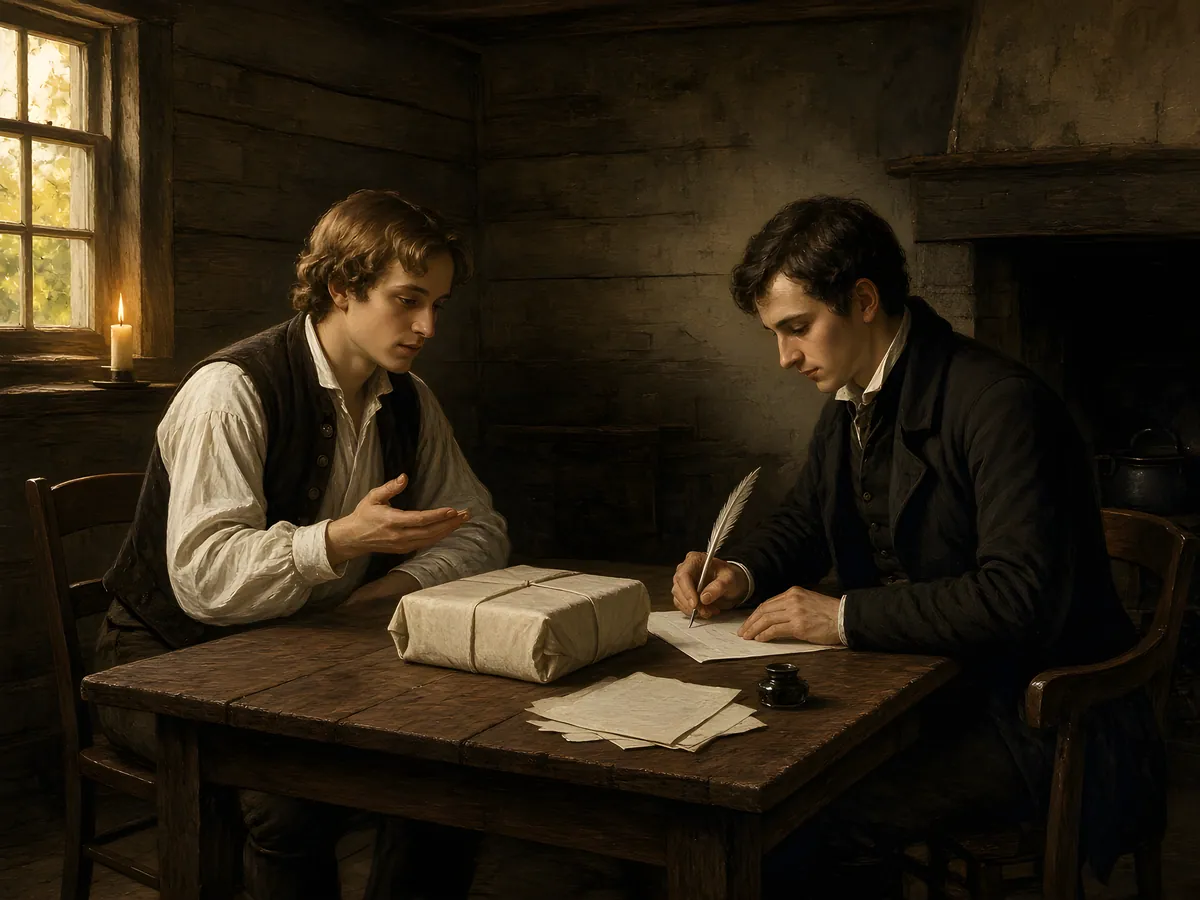
Joseph Smith would not explain the method in detail. He said the work was done “by the gift and power of God.”
The Church's essay says that “almost all of the present Book of Mormon text was translated during a three-month period between April and June of that year [1829].” Emma Smith said the plates “often lay on the table without any attempt at concealment, wrapped in a small linen table cloth.”
The interpreters were “a clear pair of stones bound together with a metal rim.” Joseph also used a seer stone. The essay says the two instruments “were apparently interchangeable and worked in much the same way.”
Gospel Topics Essay, “Book of Mormon Translation” · churchofjesuschrist.org

When asked if Joseph had dictated from the Bible or from a manuscript he had prepared earlier, Emma flatly denied those possibilities: “He had neither manuscript nor book to read from.” Gospel Topics Essay, “Book of Mormon Translation”
…the record of the people of Nephi … Written and sealed up, and hid up unto the Lord, that they might not be destroyed—To come forth by the gift and power of God unto the interpretation thereof… Title Page of the Book of Mormon · churchofjesuschrist.org
“And in the mouth of three witnesses shall these things be established” (Ether 5:4). The 1830 first edition carried two testimonies.

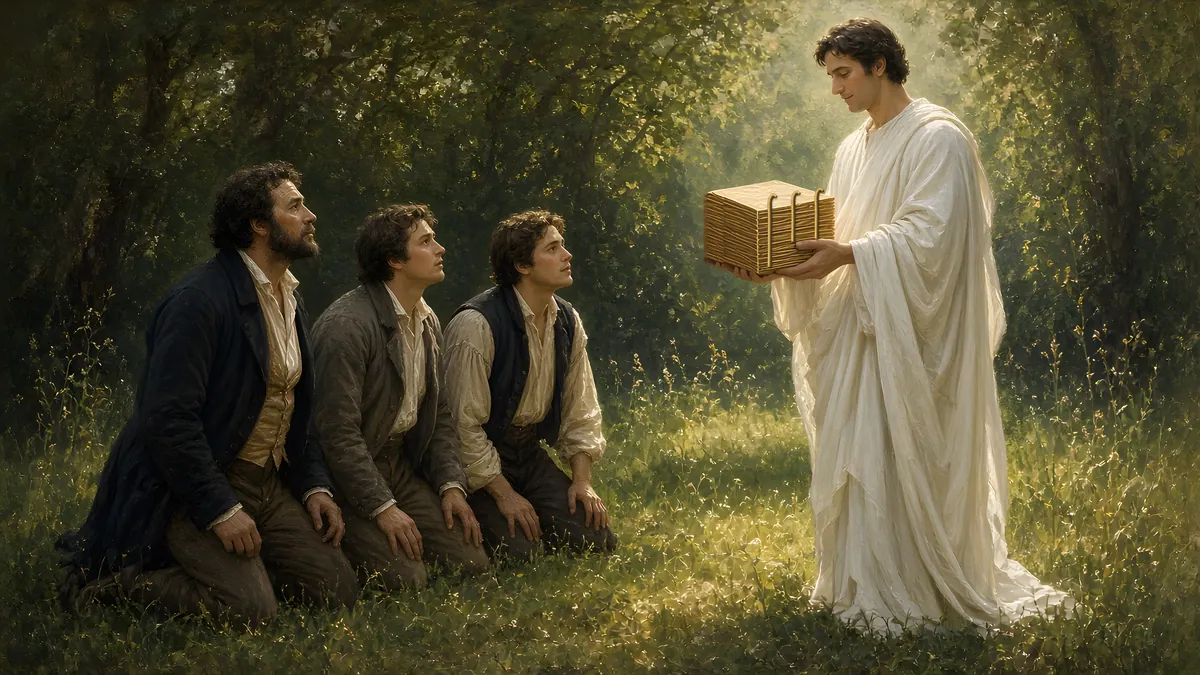
“…we declare with words of soberness, that an angel of God came down from heaven, and he brought and laid before our eyes, that we beheld and saw the plates, and the engravings thereon…”
“…for we have seen and hefted, and know of a surety that the said Smith has got the plates of which we have spoken.”
The Church's history topic adds that, despite later differences with Joseph Smith, the Three Witnesses “continued to affirm their testimony as witnesses throughout their lives,” and each of the Eight “likewise reaffirmed his testimony.” · Witnesses of the Book of Mormon